
Does it Really Work? Debunking Common Myths About Online Therapy
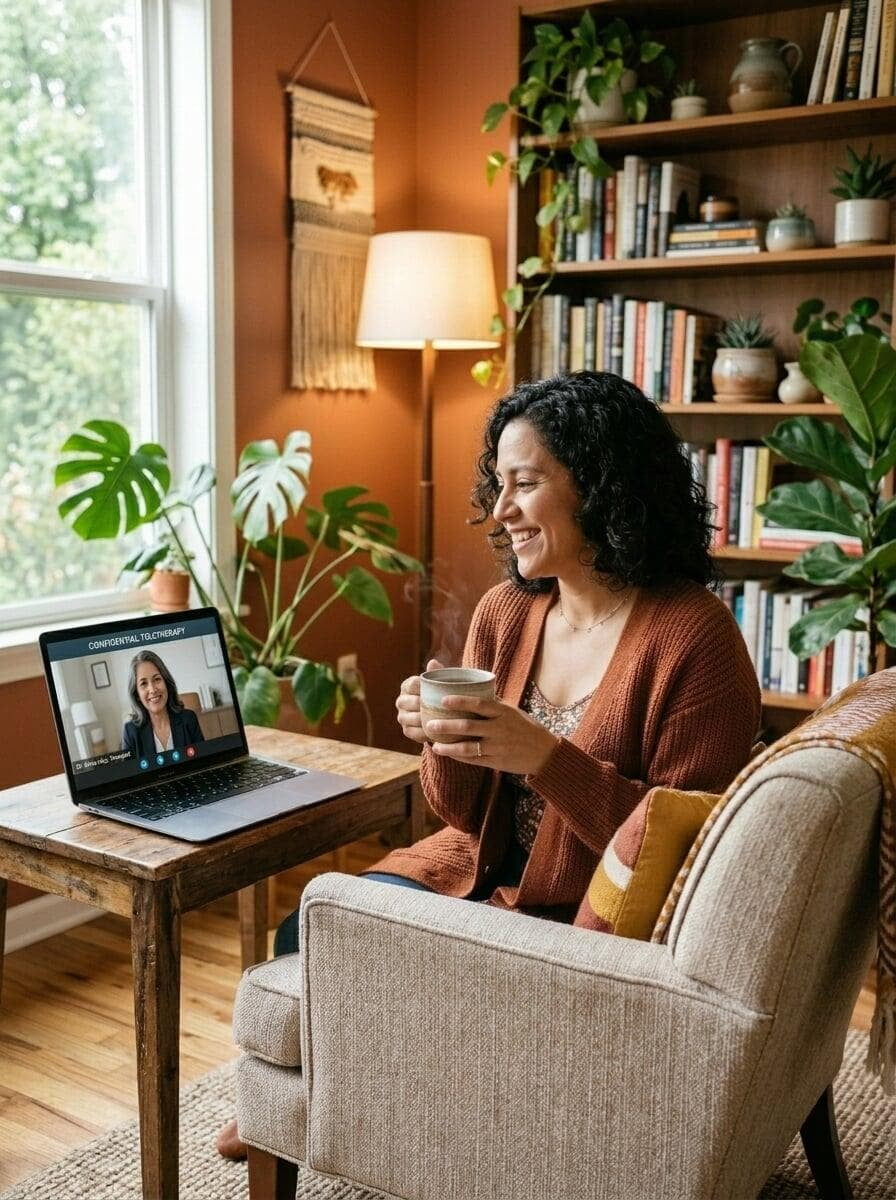
Making the decision to start therapy is a brave and deeply personal step. However, when you begin searching for support, a new question often arises: Is a screen enough? You might find yourself wondering if you can truly connect with someone through a camera, or if the "digital version" of healing is just a second-rate substitute for sitting on a physical couch.
If you are feeling hesitant, please know that your skepticism is completely valid. It is natural to protect your emotional well-being and want the highest standard of care. But the truth is that the landscape of mental health has shifted significantly. Clinical research now provides overwhelming evidence regarding the efficacy of teletherapy, proving that for most people, the digital "room" is just as transformative as the physical one.
In this post, we will peel back the curtain on the most common misconceptions and explore why online therapy isn't just a "convenient alternative," but a powerful, evidence-based modality for lasting change.
The Evidence-Based Truth: The Efficacy of Teletherapy in Modern Practice
The most persistent myth is that online therapy is "therapy-lite", a less effective version of the real thing. However, decades of clinical studies have examined the efficacy of teletherapy across various conditions, including anxiety, depression, and PTSD.
Research consistently shows that clinical outcomes for online sessions are equivalent to in-person care (Batastini et al., 2021). A meta-analysis of 57 studies examined 281 individual outcomes and found that videoconferenced mental and behavioral health services produced treatment effects that were largely equivalent to in-person care. In many cases, patients actually progress faster online because they feel more relaxed in their own environment. When your nervous system isn't taxed by the stress of traffic, parking, or sitting in a clinical waiting room, you can enter the "therapeutic window" more quickly.
The Myth of the "Impersonal" Connection
Many fear that the "human element" is lost in translation. In reality, a skilled therapist knows how to foster a deep therapeutic alliance regardless of the medium. We aren't just looking at a screen; we are observing micro-expressions, listening to the tone of your voice, and co-creating a space of radical empathy. The connection isn't in the room; it’s in the relationship!
Free Resource: Curious about the data? Download our Whitepaper: Online Therapy Myths to see the clinical evidence for yourself. Download Here
Busting the Most Common Myths About the Efficacy of Teletherapy
To help you feel more confident in your journey, let’s address three specific myths that often prevent people from seeking the help they deserve.
Myth 1: "It’s Not Secure or Private"
One of the biggest hurdles is the fear that "someone might be listening" or that data could be compromised. The Reality: Professional online therapy is a far cry from a standard FaceTime or Zoom call. As an LMFT, my practice utilizes secure, HIPAA-compliant platforms specifically designed for healthcare. These platforms use high-level encryption to ensure that what happens in our session stays between us. Your confidentiality is not just a preference; it is a legal and ethical mandate.
Myth 2: "It Only Works for Simple Problems"
Some believe that online therapy is only good for "venting" or "coaching," but not for deep clinical work like trauma or family systems. The Reality: As an LMFT (Licensed Marriage and Family Therapist), I am trained to handle complex human dynamics. The efficacy of teletherapy extends to deep-seated trauma and relationship repair. By using evidence based coping mechanisms and clinical interventions, we can navigate the most challenging parts of your history from a place where you already feel safe, your home.
Myth 3: "I’m Not Good With Technology"
The Reality: If you can click a link in an email, you can do online therapy. The goal of telehealth is to remove barriers, not create them. Most modern platforms are incredibly user-friendly and require no special software.
Why Online Therapy? The Power of Healing from Your Own Space
Beyond the clinical data, there is a "human" benefit to online therapy that a traditional office simply cannot match: The Comfort of the Familiar.
When you are dealing with depression or trauma, the world can feel like a hostile place. The act of getting dressed, driving, and sitting in a strange office can feel like an insurmountable mountain. Online therapy meets you where you are, literally.
Emotional Safety: You can have your favorite blanket, your dog by your feet, or a cup of your preferred tea. This sense of environmental control helps regulate your nervous system, making it easier to talk about difficult topics.
Convenience and Consistency: Healing requires consistency. Online sessions eliminate the "life friction" of commuting, making it easier to show up for yourself every week, even on your busiest days.
Integration: In an office, you often leave the "healing" behind when you walk out the door. When you do therapy from home, you are practicing your new coping mechanisms in the very place where your life actually happens.
Professional Excellence: Why Choosing an LMFT Matters
In the world of online wellness, the lines can get blurred. You might see "coaches" or "mentors" offering support online, often at a lower price point. However, it is vital to understand the difference between unregulated support and clinical licensure.
As a Licensed Marriage and Family Therapist (LMFT), my path to working with you involved:
Rigorous Education: A PhD and Master’s degree specifically focused on clinical psychology and family systems.
Thousands of Supervised Hours: Before being licensed, I spent years practicing under the scrutiny of veteran clinicians.
National Examinations: Passing high-stakes board exams to prove clinical competency.
Continuing Education: A commitment to staying updated on the latest research regarding the efficacy of teletherapy and mental health.
Unlike coaching, therapy is regulated by a state board. This means you have the protection of professional ethics, a clear path for accountability, and a provider who is trained to diagnose and treat clinical mental health disorders. When you work with an LMFT, you aren't just getting advice; you are getting clinical support backed by science.
Your Journey Starts Where You Are
The "digital divide" is no longer a barrier to deep, transformative healing. Whether you are struggling with the weight of depression, the constant hum of anxiety, or the shadows of past trauma, the efficacy of teletherapy ensures that you can receive world-class care without ever leaving your front door.
You don't have to wait until you have "time for the drive" or until you feel "strong enough" to go to an office. You can start exactly where you are sitting right now.
Take the Next Step
If you’re ready to experience a therapeutic connection that is as professional as it is convenient, I invite you to reach out.
Learn More: Read our full report on the success rates of digital healing in our Whitepaper: The science and success rates of teletherapy.
Ready to Begin? Visitsilvialeija.com to book your initial consultation or click here!
Let’s transform your space into a place of healing.